How Interactive Whiteboards Enhance Classroom Collaboration
5 December 2025
Education is evolving rapidly, and technology plays a massive role in shaping modern classrooms. Among the most transformative tools in education today are interactive whiteboards (IWBs). These digital boards don't just replace traditional chalkboards—they revolutionize how teachers and students interact, making learning more engaging, collaborative, and dynamic.
But how exactly do interactive whiteboards enhance classroom collaboration? Let’s dive in and uncover the benefits, features, and real-world impact of these high-tech teaching tools.
🚀 The Power of Interactive Whiteboards in Education
Imagine a classroom where students aren’t just listening to lectures but actively participating in lessons. With interactive whiteboards, learning becomes visual, hands-on, and exciting. Instead of passively absorbing information, students can actively engage with content, collaborate with peers, and retain knowledge more effectively.Why does this matter? Because students learn better when they are engaged—and interactive whiteboards are designed to foster that engagement.
🔥 Key Features That Promote Collaboration
1. Touchscreen & Multi-User Capability
Traditional whiteboards allow only one person to write at a time. Interactive whiteboards, however, support multiple users simultaneously. Students can brainstorm together, solve problems collaboratively, and engage in group discussions—all on a shared screen.This means more hands-on learning and less passive note-taking. It encourages teamwork, problem-solving, and critical thinking skills.
2. Digital Tools & Multimedia Integration
A standard whiteboard is just a surface for writing. But an interactive whiteboard is a gateway to a world of digital tools. Teachers can integrate videos, animations, and 3D models into lessons, making abstract concepts easier to grasp.Need to explain how a volcano erupts? Instead of just drawing a diagram, you can show an actual volcanic eruption video right on the board. This sparks curiosity and deepens understanding.
3. Real-Time Collaboration
With cloud-based features, students can collaborate in real time—whether they are in the classroom or participating remotely. Interactive whiteboards support screen sharing, editing, and live contributions, fostering a connected learning environment.Imagine a history lesson where students can collaboratively annotate historical artifacts or a science experiment where students can record and analyze data together—all in a shared workspace.
4. Interactive Quizzes & Assessments
Gone are the days of boring pop quizzes! With IWBs, teachers can create interactive quizzes, polls, and games to assess student understanding in a fun and engaging way. Instead of raising hands, students can submit answers digitally, making participation more inclusive.This not only makes assessments stress-free but also provides instant feedback, allowing teachers to adjust lessons based on student performance.
5. Seamless Integration with Other Devices
Interactive whiteboards connect effortlessly with tablets, laptops, and smartphones. Students can contribute ideas from their own devices, participate in polls, or work collaboratively on projects without leaving their seats.This fosters a tech-savvy classroom, preparing students for the digital world they are growing into.
🎯 Benefits of Interactive Whiteboards for Classroom Collaboration
✅ Encourages Active Participation
No more one-way lectures. Students get to interact with lessons, manipulate digital objects, and collaborate on projects—leading to deeper understanding and retention.✅ Promotes Teamwork & Communication
Interactive whiteboards encourage peer-to-peer discussions, group work, and collective problem-solving. When students work together, they develop teamwork skills crucial for future careers.✅ Enhances Creativity & Engagement
From digital storytelling to interactive brainstorming, these boards unleash creativity. Students can draw, annotate, edit, and present their ideas visually, making learning more dynamic.✅ Makes Learning Inclusive
Every student learns differently. Interactive whiteboards support audio, video, and text-based inputs, catering to multiple learning styles. This ensures that every student stays engaged, regardless of how they grasp new concepts.✅ Bridges the Gap Between In-Person & Remote Learning
With hybrid learning becoming more common, IWBs ensure that both in-person and online students can collaborate seamlessly. Everyone has access to the same materials, discussions, and activities—no matter where they are.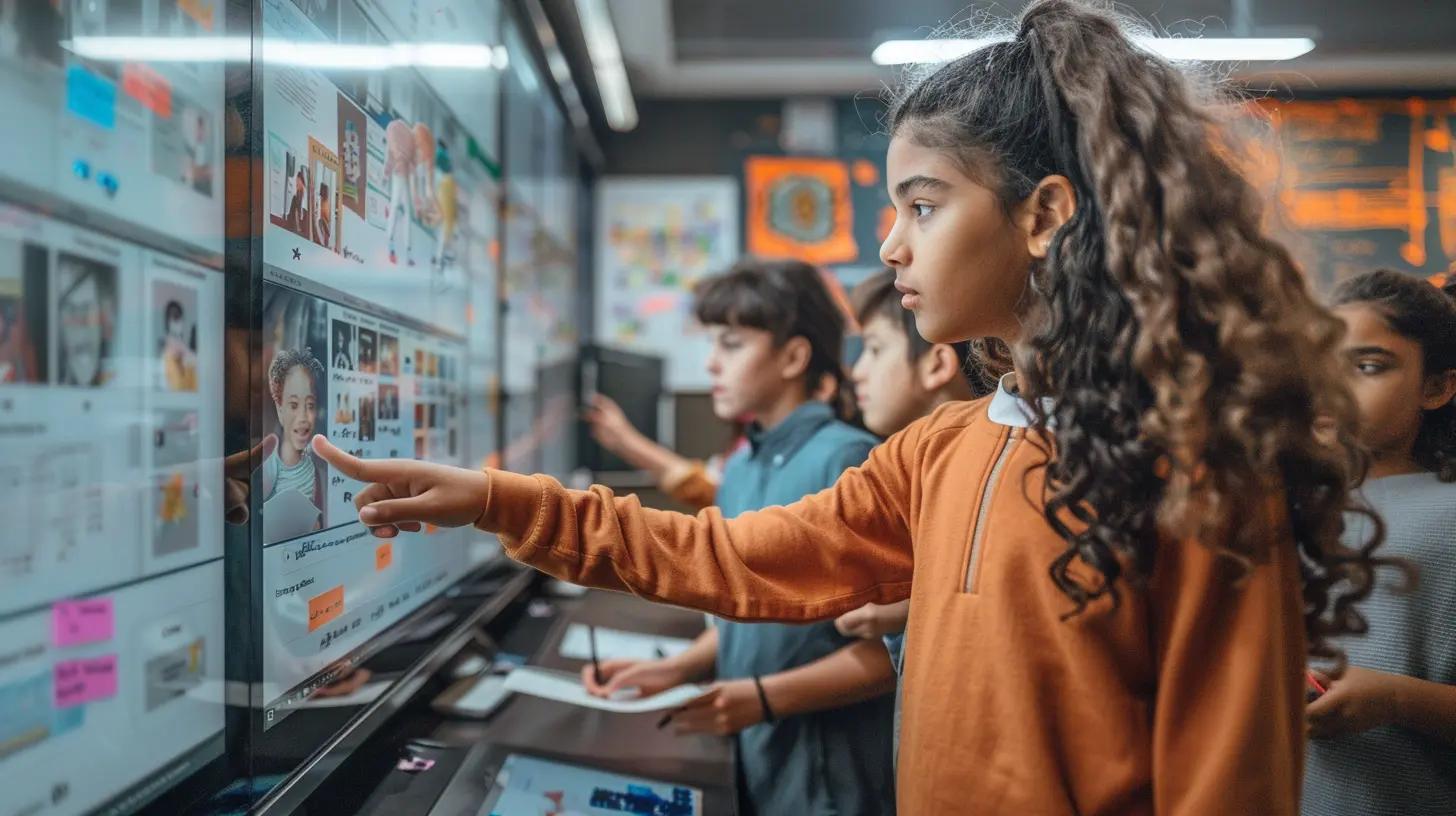
🌍 Real-World Impact: How Schools Are Using IWBs
The results speak for themselves. Many schools worldwide have embraced interactive whiteboards, and the impact has been phenomenal.- Elementary Schools use IWBs for engaging storytelling sessions, allowing young students to interact with digital storybooks.
- High Schools integrate IWBs into math and science lessons, enabling real-time equations and simulations.
- Colleges & Universities leverage IWBs for virtual lectures, making learning more flexible and interactive for students.
Teachers report higher student participation, improved information retention, and greater enthusiasm for learning when IWBs are part of the classroom.
💡 Tips for Maximizing Interactive Whiteboard Collaboration
To get the most out of an interactive whiteboard, educators can follow these strategies:1. Encourage Student-Led Sessions – Let students take charge by presenting lessons, brainstorming ideas, or leading class discussions.
2. Use Gamification – Incorporate educational games and quizzes to make learning competitive and fun.
3. Leverage Online Resources – Connect to educational platforms like Google Classroom, Kahoot, or Microsoft Teams for seamless collaboration.
4. Record Lessons for Later Review – Students can revisit interactive sessions, reinforcing learning at their own pace.
5. Enable Remote Contributions – Students who are absent or learning online can still participate in real time, ensuring they don’t fall behind.
🚀 The Future of Learning with Interactive Whiteboards
Interactive whiteboards aren't just a trend—they are shaping the future of education. As technology advances, these tools will become even more intuitive, interactive, and accessible, ensuring that every student benefits from an engaging learning environment.Think about it—why settle for boring lectures when learning can be as exciting as a collaborative adventure? With IWBs, students and teachers work together, making education more dynamic, interactive, and effective.
So, if your school hasn’t embraced interactive whiteboards yet, maybe it’s time to start! After all, the future of learning is all about collaboration, technology, and engagement.
all images in this post were generated using AI tools
Category:
Innovation In EducationAuthor:

Olivia Chapman
Discussion
rate this article
2 comments
Ainsley Roth
Great insights on the impact of interactive whiteboards! Their ability to foster collaboration and engagement truly transforms the learning experience for both students and teachers.
December 14, 2025 at 4:46 AM
Olivia Chapman
Thank you! I’m glad you found the insights valuable. Interactive whiteboards indeed play a crucial role in enhancing collaboration and engagement in the classroom.
Nixie White
Facilitates engaging group discussions.
December 8, 2025 at 11:24 AM
Olivia Chapman
Thank you! Interactive whiteboards truly create a dynamic environment that fosters participation and collaboration among students.