Motivating Students Through Collaborative Learning
28 March 2026
Let’s face it—getting students motivated can sometimes feel like trying to get a cat to take a bath. It’s slippery, unpredictable, and often ends with someone (probably you) feeling utterly defeated. But what if there was a secret ingredient that could boost motivation, make learning more fun, and even help students understand each other better? Cue the applause for our unsung educational hero: collaborative learning.
No, it's not a magic spell. And it definitely doesn't involve students holding hands and singing “Kumbaya” (unless they really want to). It’s about students working together, sharing ideas, solving problems, and—believe it or not—learning more effectively. So grab a cup of coffee, sit back, and let’s chat about how we can motivate our students through the power of collaboration.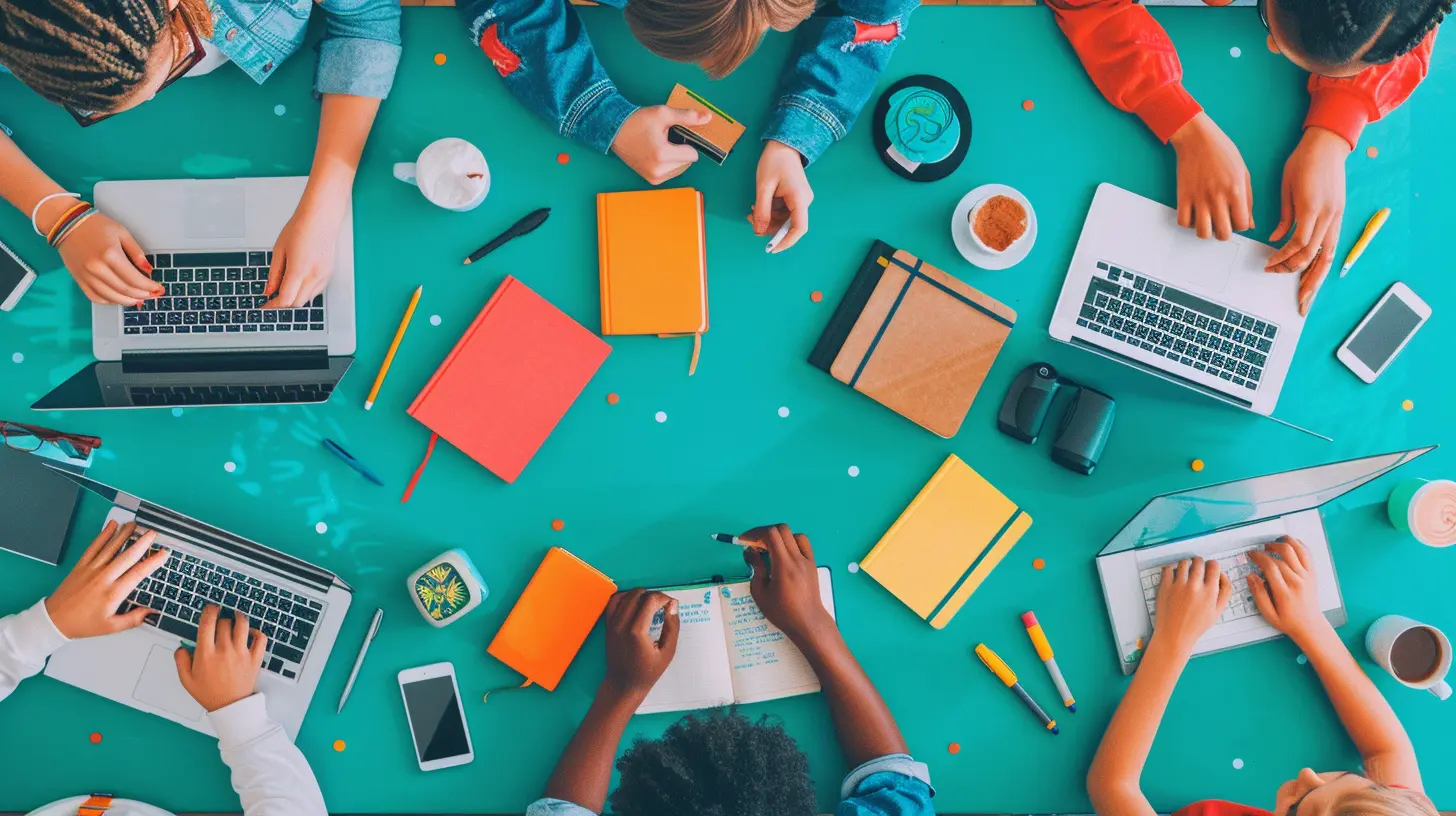
What Is Collaborative Learning, Anyway?
Before we jump into the deep end, let’s wade through the basics. Collaborative learning is an educational approach where students work together in small groups to achieve shared learning goals. Think of it like group projects—but better. The idea is that learning becomes more meaningful when it’s social.Instead of sitting in rows like birds on a wire, passively absorbing info from the teacher, students get to roll up their sleeves and engage. They tackle real questions, challenge each other’s ideas, and—most importantly—learn how to think critically.
It’s kind of like cooking with friends instead of nuking a frozen dinner in the microwave. Sure, both get the job done, but the results (and the experience) are vastly different.
Why Motivation Matters (More Than You Think)
Motivation is the fuel in the education engine. You can have the best curriculum, the flashiest tech, and the most inspirational posters on the wall—but if students aren’t motivated, it's like trying to drive a Ferrari with no gas.Unmotivated students are less likely to participate, less likely to retain information, and, let’s be real, more likely to spend class time daydreaming about pizza.
That’s where collaborative learning swoops in like a caped crusader.
The Psychology Behind Collaborative Learning
Let’s nerd out just a little—promise it’ll be quick. Collaborative learning taps into some powerful psychological principles. Here are a few:1. Social Interdependence Theory – Basically says we’re more motivated when we know our success is tied to others. If our teammate’s grade depends in part on us, we’re gonna step up.
2. Zone of Proximal Development (ZPD) – Coined by Vygotsky (yes, say that three times fast), it’s about how we learn best just beyond our current abilities—with a little help from our peers.
3. Constructivism – We construct knowledge better when we actively engage and talk through it with others.
Translation: when students work together, the brain lights up like a Christmas tree.
Real Benefits of Collaborative Learning (Spoiler: There Are A Lot)
1. Builds a Sense of Belonging
Ever felt like the odd one out? Yeah, students feel that too. Collaborative learning helps create a team-like environment. Students feel seen, heard, and included. That built-in support system is a massive motivational booster.2. Boosts Confidence
When students explain concepts to their peers, it solidifies their understanding and builds confidence. Plus, asking questions in a small group is way less intimidating than raising your hand in front of the whole class.3. Sparks Creativity
More brains = more ideas. Group settings encourage brainstorming, perspective sharing, and outside-the-box thinking that solo work often lacks.4. Develops Communication & Social Skills
In life, knowing how to work with others is gold. Collaborative learning teaches students to listen, empathize, express ideas clearly, and even mediate conflicts (read: not throw a pencil when someone disagrees).5. Keeps Students Engaged
Face it—working together is often just more fun. When students are actively involved, boredom packs its bags. Suddenly, that sleepy 2 p.m. class turns into a vibrant, buzzing hive of learning.Tips to Make Collaborative Learning Actually Work
Okay, now that we’re all hyped up about it, how do we make collaborative learning work without it turning into chaos or a one-student-does-all-the-work fest?1. Set Clear Goals and Roles
Don’t just throw students into a group and cross your fingers. Give them a clear task and assign roles (like timekeeper, note-taker, presenter). This keeps things structured and ensures everyone contributes.2. Mix Up the Groups
Let’s shake things up! Mix abilities, personalities, and backgrounds. Diversity in groups fosters richer discussions and learning from different perspectives.3. Incorporate Technology
Use collaborative tools like Google Docs, Padlet, or Jamboard. These make it easier to share ideas and work together—even remotely.4. Keep It Real
Tasks should be meaningful. Real-world problems or challenges spark more engagement than hypothetical ones. Want students to brainstorm how to reduce school waste? Now you’ve got their attention.5. Check In (Without Hovering)
Monitor progress but give them space to navigate challenges. Think of yourself as a GPS—there if they go off-course, not steering the wheel the whole time.Collaborative Learning Activities That Don’t Suck
Let’s be honest—some group activities are just... meh. But these? These will have your students high-fiving (or at least not rolling their eyes).– Think-Pair-Share
Give students a question. Let them think about it solo, then discuss with a partner, and finally share with the class. Simple, quick, and effective.– Jigsaw Groups
Split a topic into parts. Each student becomes an “expert” in one area, then teaches their group. Hello comprehension AND collaboration!– Peer Review Workshops
Let students review and give feedback on each other’s work. It’s like having a bunch of tutors in the room.– Debate Teams
Turn learning into a friendly face-off. Want to see motivation skyrocket? Let them spar over who was the better leader—Nelson Mandela or MLK Jr.– Group Research Projects
Let students dive into a topic, create something cool, and present it. Bonus: They actually take ownership of their learning.Addressing the Obvious: What If Some Students Don’t Pull Their Weight?
A-ha! The group work elephant in the room. We’ve all seen it—the student who coasts while others sweat bullets. Here’s how to handle it:- Use peer evaluations to keep everyone accountable.
- Assign specific roles and rotate so no one’s stuck being “the researcher” forever.
- Meet with groups midway to check in on dynamics.
- Create a group contract outlining expectations.
Remember, part of collaborative learning is learning how to collaborate. Sometimes, that means navigating challenges and learning how to handle slackers (gracefully, of course).
The Teacher’s Role: Guide on the Side
Here’s the cool part—you don’t have to be the all-knowing sage at the front of the class. With collaborative learning, you morph into a facilitator, a coach, the wise Yoda to their band of curious jedis.Your job? Set the stage, provide tools, ask guiding questions, and swoop in with support when needed. Trust me—it’s rewarding to see students take charge of their own learning journey.
Wrapping It All Up (With a Collaborative Bow)
Motivating students doesn’t have to be a constant uphill climb. Collaborative learning brings energy, engagement, and genuine curiosity into the classroom. It helps students connect—not just with the material, but with each other.By creating environments that value sharing, respect, and collective problem-solving, we’re not just teaching our students facts—we’re teaching them how to be learners for life.
So let's ditch the monotony, pass the metaphorical group project baton, and let collaborative learning lead the way to a more motivated, inspired classroom.
Because in the end, learning is better when we do it together.
all images in this post were generated using AI tools
Category:
Student MotivationAuthor:

Olivia Chapman
Discussion
rate this article
2 comments
Liora Mendoza
Great insights! Collaborative learning truly enhances student engagement and fosters teamwork skills effectively.
April 4, 2026 at 3:54 AM
Olivia Chapman
Thank you! I'm glad you found the insights valuable. Collaborative learning indeed plays a crucial role in boosting engagement and teamwork skills.
Henrietta McConnell
“Collaborative learning: where students team up to tackle projects and discover that teamwork truly means ‘you do the work, I’ll do the snacks!’”
March 28, 2026 at 1:13 PM
Olivia Chapman
That's a fun take on teamwork! Balancing effort and enjoyment is key to making collaborative learning effective and engaging.