Preparing Your Child for the Digital Classrooms of 2026
9 May 2026
Let's be real for a second. If you have a kid in school right now, you've probably already seen the writing on the wall. The old days of lugging around a backpack full of textbooks and scribbling notes on ruled paper are fading fast. By 2026, the digital classroom isn't going to be some sci-fi experiment. It's going to be the standard. And if you're not thinking about how to get your child ready for it, you might be setting them up for a rough ride.
I'm not talking about just buying a laptop and calling it a day. That's like handing a teenager a driver's license and expecting them to navigate a Formula 1 track. The digital classroom of 2026 will be a completely different beast. It will be faster, more immersive, and more demanding in ways that require a new kind of thinking. We're talking about AI tutors that adapt to your child's specific learning gaps, virtual reality field trips to ancient Rome, and collaborative projects where kids in Tokyo, London, and Chicago are working on the same digital whiteboard in real time.
So how do you prepare for that? How do you make sure your kid isn't just surviving, but actually thriving? Let's break it down, piece by piece, without the fluff.

The Core Shift: From Consumer to Creator
First, you need to understand the fundamental change. Right now, a lot of kids use technology to consume. They watch videos, scroll through social media, and play games. That's passive. The digital classroom of 2026 demands active creation. Your child won't just be reading about history; they'll be building a digital timeline, editing a short documentary, or coding a simulation of a historical battle.This shift is huge. It means the skills your child needs aren't about memorizing facts. They're about problem-solving, critical thinking, and the ability to use tools to build something from scratch. Think of it like this: in the past, a student might have written a book report. In 2026, they might create a podcast analyzing the themes of that book, complete with sound effects and interviews. The effort is higher, but the engagement is deeper.
So, how do you teach a child to be a creator? Start small. Don't throw them into a coding boot camp overnight. Instead, encourage them to make something digital for fun. Maybe it's a simple video game using a drag-and-drop platform like Scratch. Maybe it's a stop-motion animation with their toys. The goal is to get them comfortable with the idea that technology is a tool for making, not just watching. When they hit that digital classroom, they won't be intimidated by a blank screen. They'll see it as an invitation.
The Screen Time Reality Check
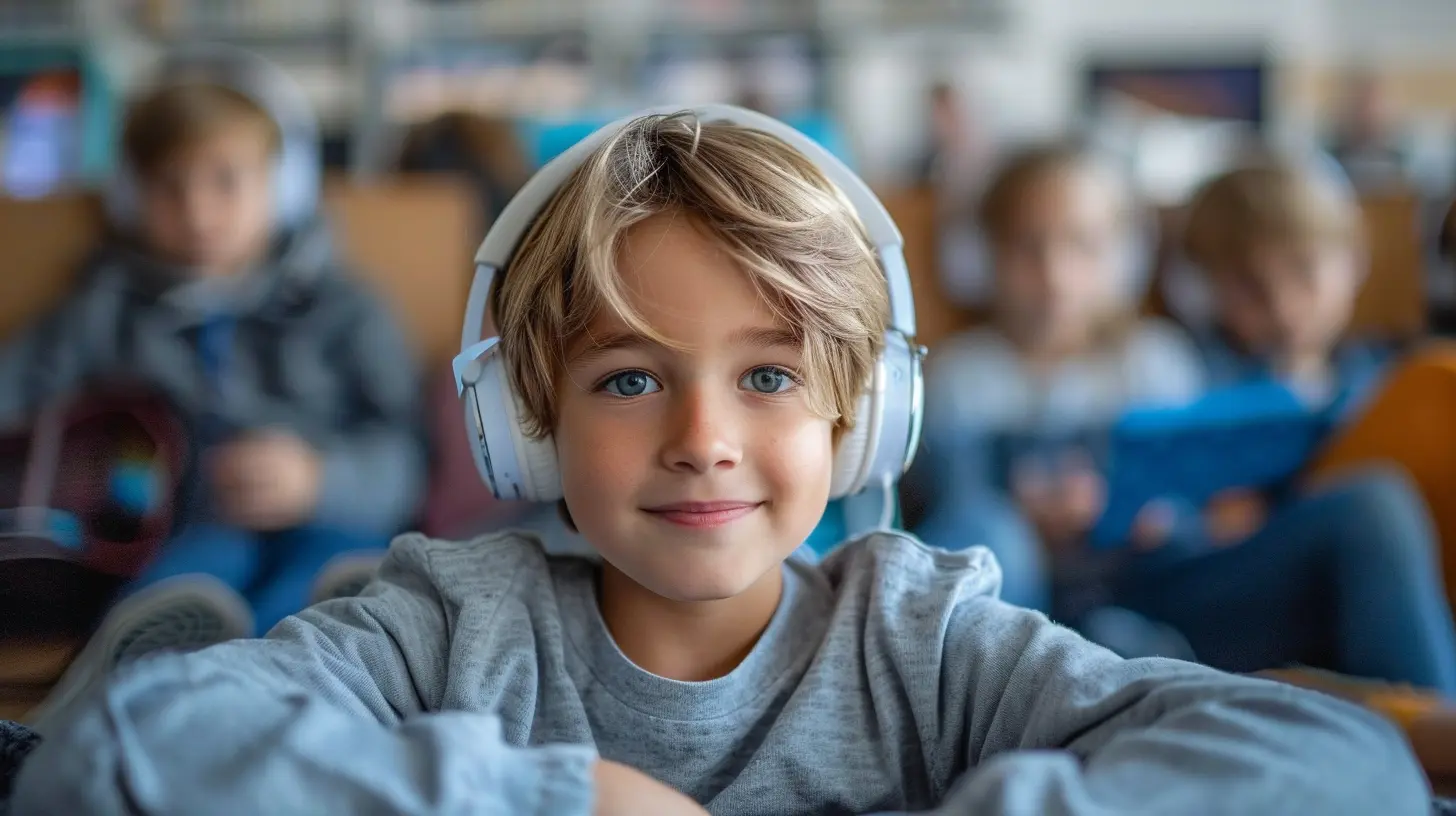
Let's talk about the elephant in the room: screen time. Every parent I know worries about this. And honestly, you should. But the narrative needs to shift from "screen time is bad" to "what kind of screen time is it?"In 2026, your child will likely spend four to six hours a day on a device for school. That's a lot. But if you've only ever treated screens as a babysitter or a reward, you're fighting a losing battle. The key is to teach digital literacy and self-regulation early. I'm not saying you need to be a tech guru. You just need to have honest conversations.
Ask your kid questions like: "Why do you feel like you need to check your notifications every five minutes?" or "How does your brain feel after two hours of scrolling versus two hours of building something in a design app?" This isn't about nagging. It's about building awareness. A child who understands their own attention span is a child who can manage it.
And here's a practical tip: create "analog zones" in your house. The dinner table, the bedroom after a certain hour, or a weekend afternoon where screens are off. This isn't about punishment. It's about creating a healthy rhythm. The digital classroom of 2026 will demand intense focus. If your kid's brain is trained to jump from one dopamine hit to another every ten seconds, they're going to crash. Hard.
The Skills That Matter: Beyond the Keyboard
I keep hearing parents say, "My kid is great with a tablet, so they'll be fine." That's like saying someone is a great driver because they know how to turn the steering wheel. Knowing how to swipe and tap is not the same as knowing how to learn in a digital environment.Here are the three real skills your child needs to master for 2026:
1. Information Filtering. The internet is a firehose of garbage and gold mixed together. By 2026, AI will be generating even more content, some of it misleading. Your child needs to know how to verify a source. They need to ask: "Who wrote this?" "What is their bias?" "Is this backed by evidence?" You can practice this at home. When they ask a question, don't just give them the answer. Say, "Let's find out together. Show me where you found that information." Turn it into a detective game. The best students in 2026 won't be the ones who know the most facts. They'll be the ones who can find and validate the best facts fastest.
2. Digital Collaboration. Group projects are already a pain, right? Now imagine doing them with kids you've never met in person. That's the future. Your child needs to learn how to communicate clearly in writing, how to give constructive feedback on a shared document, and how to manage their time when nobody is standing over their shoulder. You can foster this by encouraging them to play online games that require teamwork, like Minecraft on a shared server or a cooperative puzzle game. Watch how they interact. Do they get frustrated easily? Do they blame others? Those are the same habits they'll bring to a digital classroom.
3. Resilience and Self-Advocacy. Here's the ugly truth: technology breaks. The Wi-Fi will go down. The platform will glitch. The file will corrupt. In a traditional classroom, a kid raises their hand and the teacher fixes it. In a digital classroom, they might need to troubleshoot on their own or know exactly when to ask for help. This is a muscle you have to build. Stop fixing everything for your child. When their tablet freezes, don't jump in immediately. Say, "Okay, what have you tried so far?" Let them fail a little. Let them get frustrated and figure it out. The child who can calmly say, "My microphone isn't working, can you hear me?" is the child who won't panic when the pressure is on.

The Parent's Role: Coach, Not Tech Support
I know you're probably thinking, "I don't even know how to use half of these tools." That's fine. Actually, that's more than fine. It's an advantage.If you try to be the expert, you'll either get frustrated or your child will tune you out. Instead, position yourself as a coach. Your job isn't to know the answers. Your job is to ask the right questions. Say things like: "Show me how you did that." "What was the hardest part of that assignment?" "If you could change one thing about this tool, what would it be?"
This flips the dynamic. You become a curious partner, not a hovering manager. And it teaches your child to articulate their process, which is a huge skill in itself. The digital classroom of 2026 will rely heavily on metacognition-thinking about your own thinking. If your kid can explain their workflow to you, they can explain it to a teacher or a peer.
Also, let's talk about your own screen habits. Kids are mirrors. If you're glued to your phone during dinner, don't be surprised when they can't put theirs down. Model the behavior you want to see. Read a physical book. Have a conversation without checking your email. Show them that digital tools are for specific purposes, not for constant background noise. It's hard, I know. But it's the single most powerful thing you can do.
The Tools of 2026: What's Actually Coming?
Let's get a little specific so you know what to look out for. By 2026, the average classroom won't just have a laptop cart. It will have a suite of integrated tools.First, expect AI-powered adaptive learning platforms. These aren't just digital textbooks. They are systems that watch how your child solves a math problem, see where they get stuck, and then automatically offer a different explanation or a simpler problem to practice. It's like having a personal tutor who never gets tired. The upside is huge for kids who need extra help. The downside? If your child isn't used to learning independently, they might zone out. Prepare them by encouraging self-paced learning at home. Khan Academy, Duolingo, or even YouTube tutorials are great for this.
Second, virtual and augmented reality. This isn't a gimmick anymore. Your child might put on a headset and walk through the human circulatory system, or stand on the surface of Mars. It's immersive and powerful. But it can also be disorienting and isolating. Talk to your child about the difference between a virtual experience and a real one. Ground them in reality. After a VR lesson, ask them how it felt. Did they feel dizzy? Did they feel like they were actually there? This builds critical awareness.
Third, digital portfolios. Forget report cards that just show a letter grade. By 2026, your child's work will be collected in a digital portfolio. Videos of presentations, code they wrote, essays they drafted, art they created. This is their public resume. It's not about the grade anymore; it's about the evidence of learning. Start encouraging your child to save their best work now. Help them take screenshots, record themselves explaining a project, or write a short reflection on what they learned. This builds a habit of pride in their work, not just completion.
The Emotional Side: Don't Forget the Human
We've talked about skills and tools, but let's get to the heart of it. The digital classroom can be lonely. Your child might be in a room with thirty other kids, but if everyone is staring at a screen, the social connection can evaporate.This is where emotional intelligence becomes a superpower. Your child needs to know how to read a room, even a virtual one. They need to know when to mute themselves, when to speak up, and how to show empathy through a chat box. These are soft skills, but they are the hardest to teach.
Role-play with them. Practice a video call with a grandparent. Have them say "thank you" and "I appreciate your help" in a message. Talk about tone. Explain that a text that says "What do you mean?" can sound aggressive, while "Could you explain that a little more?" sounds curious. These micro-skills will determine whether your child is seen as a team player or a difficult partner.
And please, don't underestimate the value of boredom. In a world of constant digital stimulation, the ability to sit still and think is a rare and valuable skill. Let your child be bored. Don't fill every free moment with an app or a video. Boredom is where creativity lives. It's where they figure out who they are without a screen. The digital classroom of 2026 will demand high performance. But it will also demand high recovery. Teach them to unplug.
A Final Word: Start Now, Not Later
Look, I'm not going to lie to you. This transition is scary. It feels like you're trying to prepare for a test you haven't even seen yet. But here's the good news: you don't need to be perfect. You don't need to have the latest gadgets or a degree in computer science.What you need is a mindset. A mindset that says, "I am my child's guide, not their technician." A mindset that says, "I will ask questions instead of giving answers." A mindset that says, "I will allow failure, because that's where growth lives."
Start small. Pick one thing from this article and try it this week. Maybe it's the "analog zone" at dinner. Maybe it's asking your kid to show you how they did something online. Maybe it's just having a conversation about what they think school will be like in two years.
The digital classroom of 2026 is coming. It's not a question of if. It's a question of how ready you and your child are. And the truth is, the most important tool you have isn't a tablet or a fast internet connection. It's your willingness to learn alongside them. So take a deep breath. You've got this.
all images in this post were generated using AI tools
Category:
Parenting And EducationAuthor:

Olivia Chapman
Discussion
rate this article
2 comments
Zephyrae Stevens
This article is a great resource for navigating the future of digital classrooms. Focusing on skills like critical thinking and digital literacy will empower children to thrive. Encouraging open discussions about technology at home can also build their confidence and adaptability. I look forward to seeing how these strategies evolve.
August 22, 2026 at 3:19 AM
Virginia McNeal
Great insights, thank you!
May 23, 2026 at 3:22 AM
Olivia Chapman
Thanks for your kind words! I'm glad you found it helpful.