The Power of Crowdsourced Knowledge in Modern Education
9 January 2026
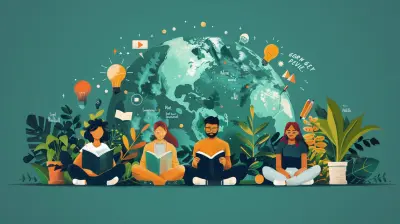
Picture this: a classroom without walls, a textbook that keeps updating itself, and a teacher whose voice is made up of thousands. Sounds futuristic? Well, welcome to the present. This is the magic of crowdsourced knowledge, and it's changing the way we learn—forever.
What Is Crowdsourced Knowledge, Anyway?
Let’s break it down real simple. Crowdsourced knowledge is information or insights gathered from a large group of people, especially from an online community. Think Wikipedia, Reddit, Quora, or even your favorite how-to YouTube channel. Instead of relying on a single expert or a dusty textbook from 1998, you’re tapping into a sea of real-time knowledge created and curated by real people.It’s like creating a master recipe from thousands of home cooks rather than one celebrity chef. Sure, the chef knows a lot, but the crowd? They’ve tried every spice and burned a few dishes along the way—they know what works.
Why It’s a Game-Changer in Education
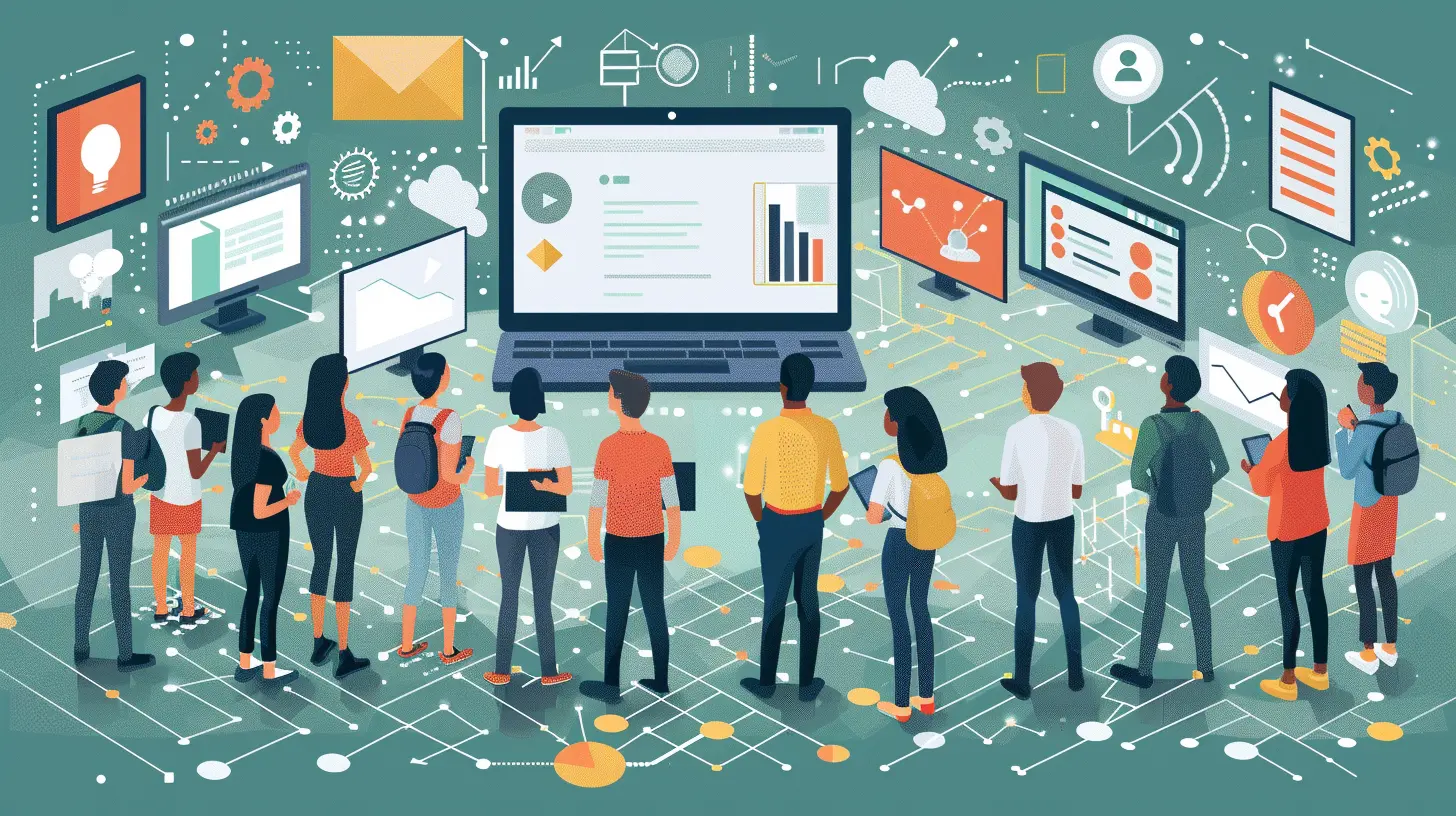
Education has always been about access to knowledge. Traditionally, that access came through teachers, libraries, and institutional material. But here’s the twist: crowdsourced knowledge decentralizes that access. This means anyone, anywhere, can contribute what they know—and anyone else can benefit from it.1. It's Accessible to Everyone
One of the best things about crowdsourced knowledge? It’s often free and open to all. Students from low-income areas, remote villages, or developing countries—who might not have access to quality institutions—can learn from some of the brightest minds across the globe.And let’s be honest, when you're stuck on understanding a physics concept at 2 a.m., who do you turn to? Probably not your professor’s office hours—but maybe a video tutorial or a peer’s explanation on a forum.
2. It Encourages Collaboration Over Competition
Remember when education felt like a race? Everyone competing for grades, rankings, college spots… exhausting. Crowdsourced knowledge flips the script. It thrives on collaboration. People help each other not for grades, but for the joy of sharing and understanding.Platforms like Stack Overflow (for coding) or Khan Academy’s comment sections are filled with students helping students. No red pens, no judgment—just people lifting each other up.
3. It’s Real-Time and Always Evolving
Traditional textbooks may take years to update (if at all). But the internet? It updates every second. Crowd-driven platforms keep pace with new research, societal changes, and even memes that help you understand nuclear physics with SpongeBob analogies.In moments like the COVID-19 pandemic, when everything changed overnight, it wasn’t just formal institutions reacting. People across the globe shared resources, tutorials, digital tools, and ideas to keep education going. Crowdsourced knowledge is like the heartbeat of real-time learning.
Where Does It Show Up in Education?
So you might be wondering, “Okay, this all sounds cool, but where exactly is it happening?”1. Wikipedia: The Digital Encyclopedia of the World
Let’s start with the OG of crowdsourced knowledge—Wikipedia. Written and edited by volunteers worldwide, it covers everything from Aristotle to Zener Diodes. Yeah, it’s not perfect, but it’s shockingly accurate—and always improving.Students use it to get a quick overview or dive deep with citations and references. Plus, it often serves as a jumping-off point for deeper research.
2. Online Forums and Peer-to-Peer Learning Spaces
Sites like Reddit’s r/AskAcademia or r/AskPhysics are buzzing with questions—and answers—from every level of learner. And platforms like Quora allow you to ask anything and get responses from both amateurs and experts.Even social media plays a role. Twitter threads on historical events, TikToks explaining math tricks—what used to be a distraction is now a learning tool.
3. MOOCs and Learning Platforms
Massive Open Online Courses (MOOCs) like Coursera, Udemy, or edX have formal instructors, but let’s not overlook the value of discussion boards and course forums—populated by learners helping learners.This peer feedback is gold. Struggling with a concept? Chances are, someone else just figured it out and dropped a detailed explanation in the forum, complete with examples and maybe even a meme or two.
4. GitHub and Open Educational Resources
GitHub started as a platform for developers, but now it’s an educational goldmine. People share code, annotate it, and even guide newbies. Similarly, Open Educational Resources (OERs) let educators upload lessons, lesson plans, and teaching strategies for anyone to use.It’s like crowdsourcing the entire teaching process, not just the content.

The Joys and Benefits of Crowdsourced Learning
Let’s dive into why learners (you and me) are loving this shift.1. Diverse Perspectives = Deeper Understanding
Imagine learning about climate change from a scientist in Alaska, a farmer in Kenya, and a student activist in Sweden—all in one place. That’s the diversity you get with crowdsourced knowledge.It’s not just facts—it’s lived experiences, cultural contexts, and different angles you’d never find in a single textbook.
2. Learning Becomes Active, Not Passive
Crowdsourced platforms encourage questions, discussions, debates—even corrections. Instead of just absorbing information, you interact with it. You challenge it. You refine it. Which makes the knowledge stick.You’re not just reading about the engine—you’re building it with others.
3. Builds Critical Thinking and Digital Literacy
Because the information isn’t always peer-reviewed or “official,” it forces learners to verify, cross-check, and think critically. In a world drowning in fake news and misinformation, that skill is priceless.It’s like learning to fish instead of just being handed a meal.
But Hold On—There Are Challenges Too
Okay, let’s keep it real. Crowdsourced knowledge isn’t a perfect utopia. There are potholes on this digital highway.1. Quality Control Can Be Tricky
Not every Reddit answer or Wikipedia edit is gold. Sometimes, misinformation slips through, especially on controversial or complex topics.That’s why students (and educators) need to be equipped with critical thinking skills and digital awareness. Always check sources, compare answers, and approach info with a healthy dose of skepticism.
2. Not Everyone Has Equal Voice
While the internet is open, it’s not always fair. Some voices are louder than others—due to language barriers, access to technology, or cultural bias.That means certain regions or groups might still be underrepresented in crowdsourced platforms. There’s work to be done to make this truly inclusive.
3. It Can Be Overwhelming
The sheer volume of information can make your head spin. Ever Googled “history of the Cold War” and gotten 8 million results?Yeah, curation matters. Having too much knowledge without proper organization can be just as bad as having too little.
Role of Educators in the Age of Crowdsourced Knowledge
Some teachers fear they’ll become obsolete. But here’s the twist—they’re needed more than ever.Educators now act as guides through the noise, helping students find quality sources, ask better questions, and use these platforms wisely. They shape the learning experience, not by being the only source of knowledge, but by helping students process and apply it.
It’s like moving from being a mapmaker to becoming a GPS—providing direction in a vast landscape of ideas.
Future of Crowdsourced Education: Where’s This All Headed?
This isn’t a trend that’ll fizzle out—it’s just getting started.We’re already seeing AI tools that pull from crowdsourced databases to answer questions (looking at you, ChatGPT). Soon, learning might become even more personalized and interactive, thanks to these collective brains.
Imagine real-time global group projects, decentralized classrooms with learners from 20 countries, or a crowd-updated digital syllabus that adapts to what students actually want and need to know.
Scary? Maybe. Exciting? Absolutely.
Final Thoughts: Embrace the Crowd
In a nutshell, the power of crowdsourced knowledge in modern education lies in its ability to democratize learning, empower students, and constantly evolve with the times. Sure, it has flaws, but with a little guidance and a lot of curiosity, it can turn every learner into both a student and a teacher.So next time you find yourself deep in a Reddit comment thread, watching a peer explain calculus on YouTube, or editing a Wikipedia article—smile. You’re not just consuming education. You’re shaping it.
all images in this post were generated using AI tools
Category:
Innovation In EducationAuthor:

Olivia Chapman
Discussion
rate this article
2 comments
Jack Reed
This article beautifully highlights the transformative potential of crowdsourced knowledge in education. Harnessing collective wisdom not only enriches learning experiences but also fosters collaboration and community. It's inspiring to see how shared insights can empower both students and educators alike.
February 4, 2026 at 4:37 AM
Olivia Chapman
Thank you for your kind words! I'm glad you found the article inspiring and resonant with the potential of collective knowledge in education.
Sebastian Middleton
Collective wisdom transcends boundaries, enriching learning through diverse perspectives and shared experiences.
January 15, 2026 at 1:52 PM
Olivia Chapman
Thank you for capturing the essence of crowdsourced knowledge! Diverse perspectives truly enhance our understanding and enrich the learning experience.