The Learning Curve: Sped Enrollment Increasing More Slowly at Wealthy Districts
July 23, 2026 - 09:37

The number of children identified with disabilities in public schools across the country is climbing, but the growth is not evenly distributed. New data reveals a clear divide: school districts that rely heavily on high local property taxes are enrolling students in special education at a much slower rate than their less affluent counterparts.
This trend raises questions about access and identification. In wealthier communities, where families often have better access to private healthcare and early intervention programs, children may receive diagnoses and support outside the public school system. This can lead to a lower official count of students needing Individualized Education Programs (IEPs) once they enter the classroom. Conversely, in lower-income districts, schools often serve as the primary source for identifying and serving disabilities, leading to a faster enrollment increase.
The disparity also reflects funding pressures. Wealthy districts, buoyed by robust local tax bases, have more resources per pupil. However, the slower growth in sped enrollment means they are not facing the same proportional cost pressures as poorer districts, where a rising number of high-need students strains already tight budgets. Critics argue this creates an uneven playing field, where a child's access to special education services can depend more on their zip code than their actual needs. The data underscores a growing challenge in ensuring equitable support for all students, regardless of the wealth of their local school district.
MORE NEWS

October 21, 2026 - 02:44
Florida State University Highlights Worldwide Reach During International Education CelebrationFlorida State University is putting its global footprint in the spotlight during the 2026 Celebration of International Education, an event that recognizes the many ways the university connects with...

October 20, 2026 - 00:36
How an International Education Stands ApartFamilies weighing school options often ask what actually separates an international education from a strong local one. The answer goes beyond a different curriculum or a second language on the...
October 19, 2026 - 02:32
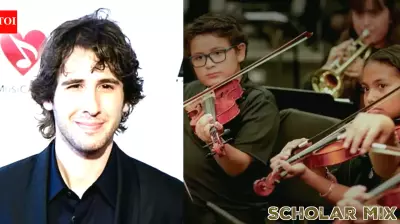
Josh Groban’s arts education foundation started with a $50,000 donation at a concert in 2005; two decades, its grants have reached 311 organisations with a new push reaching 600,000 studentsSinger Josh Groban`s commitment to arts education began with a $50,000 donation at a concert in 2005 and has since grown into a nationwide grant-making effort. His Find Your Light Foundation has...
October 18, 2026 - 02:55
Darcy Burbage: Advancing Survivorship Care Through Education and CollaborationDarcy Burbage is working to change how survivorship care is delivered, placing education and teamwork at the center of her efforts. Her work focuses on the period after active cancer treatment,...