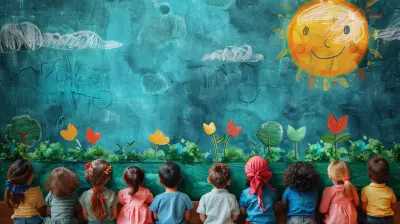
How Arts and Creativity Can Fuel Student Motivation
17 August 2026
Let’s be honest—education these days can sometimes feel a little... stale. Endless worksheets, standardized tests, rigid curriculums—it’s enough to make any student zone out. But what if there was a way to light that spark again? A way to re-ignite curiosity, reignite passion, and get students excited to learn? That’s where arts and creativity come in like a breath of fresh air.
This isn’t just about painting pretty pictures or singing songs. It’s about using creativity as a powerful tool to transform the learning experience. So, let’s dive straight in and see how arts and creativity can fuel student motivation in ways that textbooks alone sometimes can’t.
The Power of Arts and Creativity in the Classroom
Why It's More Than Just “Arts and Crafts”
When we talk about “the arts,” what comes to mind? Maybe painting, music, drama, or dance. But it goes deeper than that. Creativity isn’t just limited to the art room—it can show up in storytelling, problem-solving, or even inventing new ways to understand math equations.Integrating creativity means giving students permission to think differently. And let me tell you—when students feel like they’re allowed to be themselves, their motivation starts to climb.
The Science Backs It Up
Here's something cool: research in neuroscience shows that engaging in the arts activates different parts of the brain. It strengthens neural connections and encourages higher-order thinking. In plain English? Arts help the brain flex its muscles in different directions.This blend of emotional, sensory, and intellectual stimulation is a game-changer for motivation. Students don't just process information; they experience it. That emotional connection makes learning stick—and makes students want more.
Intrinsic Motivation: Creativity’s Secret Weapon
Let’s talk about the kind of motivation that actually lasts—the kind that comes from inside. That’s called intrinsic motivation. It’s when a student says, “I want to do this,” not just, “I have to do this.”Creativity plays a huge role here. When students get to make choices, express themselves, and see the value of what they’re doing, they feel empowered. They’re motivated by curiosity, not just by grades or gold stars.
Think about it: what would you rather do? Fill in the blanks on a worksheet, or create your own comic strip that explains a science concept? Most kids would pick the comic strip—and they'd remember more, too.
How Arts Boost Motivation Across Different Subjects
Language Arts: Writing with Flair
Writing can sometimes feel boring—especially with rigid essay formats. But bring creativity into the mix, and students light up.They can write poems, short stories, scripts, or even blogs like this one. When their voice is heard and their imagination is welcomed, their motivation to write skyrockets.
Math: Making Numbers Come Alive
Numbers on a page? Not always thrilling. But what if students designed geometric art, composed music based on patterns, or made a stop-motion animation to explain a math concept?Suddenly, math isn’t just numbers. It’s a playground.
Science: Experimenting with Expression
Science is all about wondering, discovering, and experimenting. Sounds pretty creative, right?Students can illustrate concepts, write science raps, or create dioramas of ecosystems. The arts help them show what they know in ways that stick and spark even more curiosity.
History: Bringing the Past to Life
History comes alive when students act out scenes, create visual timelines, or write fictional journal entries from a historical figure’s point of view.Instead of memorizing dates, they connect with the human side of history—and that kind of learning leaves a mark.
The Confidence Boost That Comes from Creativity
One of the most beautiful outcomes? Confidence.When students create something, they can see their own progress. They’re proud of what they’ve made. That pride builds confidence—and confidence fuels motivation.
Think about the shy student who never speaks up in class but paints a mesmerizing piece for the school art show. That moment of recognition can be the nudge they need to believe in themselves.
Creativity gives students a chance to shine in ways that traditional academics sometimes overlook.
Self-Expression = Engagement
Here’s the secret sauce: students are motivated when they feel seen and heard. Arts and creativity give students a voice.Whether it’s through writing, drawing, acting, or composing, creative activities let students express feelings and ideas that might otherwise stay bottled up. That kind of freedom leads to engagement—and engaged students are motivated students.
They’re not just following directions. They’re putting a piece of themselves into their learning.
Real-Life Skills? Yes, Please.
Sometimes, people dismiss arts as “non-essential.” That couldn't be further from the truth.Creativity teaches:
- Problem-solving: How do I express this idea in a new way?
- Collaboration: Group projects in theater, music, or art require teamwork.
- Communication: How do I get my message across?
- Critical thinking: Is there a better way to approach this task?
These are skills students carry for life—skills that employers care deeply about. So, weaving arts and creativity into education isn’t just fun—it’s future-proofing our students.
Let Students Lead the Way
Here’s something powerful: when students get a say in what they create, they take ownership of their learning.Choice is everything. Let them pick their project format. Let them choose between writing a song or building a model. Let them invent their own way to solve a problem.
When learning becomes personal, students don’t just complete tasks—they invest in them.
Teachers as Creative Guides (Not Just Information Deliverers)
Creative teaching doesn’t mean teachers have to be professional artists. It just means being open to new ways of thinking.Ask more open-ended questions. Invite students to brainstorm alternatives. Bring in music, movement, and visuals. Encourage exploration, even if it gets a bit messy.
Teachers can model curiosity and creativity, showing students that it’s okay to take risks and think differently. That modeling? Super motivating for students.
Arts Integration Isn't Just Extra—It's Essential
Let’s squash the myth that arts are just “nice to have.” Arts integration—blending creative expression into core subjects—is actually one of the most effective ways to deepen learning and boost motivation.It's not about squeezing in one art project per semester. It's about embedding creativity into the daily fabric of learning. The result? Students who are more engaged, more curious, and more motivated to show up and try.
Real Stories from Real Classrooms
Let’s bring it back to the real world. Teachers everywhere are already using creative strategies to fuel motivation.Like the middle school teacher who let her students design board games to teach vocabulary. Or the high school biology teacher whose students made animated videos explaining photosynthesis. Or the elementary class that turned a lesson on community helpers into a full-blown puppet show.
In every case, students weren’t just learning. They were loving it.
You Don’t Need Fancy Supplies, Just an Open Mind
Think creativity means expensive art programs or tech gadgets? Nope. All it takes is flexibility and a little imagination.Use recycled materials, free online tools, or even just good old-fashioned pencil and paper. The real magic is in the mindset, not the materials.
Final Thoughts: Creativity Is the Fuel Education Needs
At the end of the day, creativity isn't just a nice extra. It's the fuel that keeps the educational engine running. It’s what turns “have to” into “want to.” It makes learning feel meaningful, exciting, and real.By weaving arts and creativity into every part of education, we’re not just helping students become better learners—we’re helping them become more confident, curious, and compassionate humans.
And really, isn’t that what education should be all about?
all images in this post were generated using AI tools
Category:
Student MotivationAuthor:

Olivia Chapman
Discussion
rate this article
2 comments
Freya Moore
Integrating arts into education ignites passion and innovation. By allowing students to express themselves creatively, we not only boost motivation but also foster critical thinking and problem-solving skills essential for their future.
August 22, 2026 at 3:19 AM
Olivia Chapman
I completely agree. Integrating arts into education not only sparks creativity but also develops essential skills that students will carry into their futures. It's a powerful way to enhance engagement and learning.
Kaitlyn Love
Exploring the connection between creativity and motivation is fascinating. I can't wait to learn more!
August 20, 2026 at 12:57 PM
Olivia Chapman
Thanks for your enthusiasm! I'm excited to share insights on how creativity can spark student motivation. Stay tuned!