How Project-Based Learning Encourages Real-World Problem Solving
30 November 2025
In today’s fast-paced world, education isn't just about memorizing facts and passing exams. It's about equipping students with the skills they need to tackle real-world problems. Enter Project-Based Learning (PBL), a transformative educational approach designed to do just that. Unlike traditional teaching methods, PBL encourages students to engage in hands-on, meaningful projects that directly relate to real-world issues. Sounds interesting, right?
But how exactly does project-based learning foster real-world problem-solving skills? Let's break it down and explore the ins and outs of this engaging teaching method.
What is Project-Based Learning?
Before diving into how it helps solve real-world problems, let's clarify what Project-Based Learning (PBL) actually is.In a nutshell, it's a student-centered teaching method where learners gain knowledge and skills by working over an extended period on a project. This project is usually based on a complex question, problem, or challenge. Think of it like this: instead of just reading about environmental issues in a textbook and taking a test, students might actually design and propose real-world solutions to reduce plastic waste in their local community.
Sounds much more engaging, doesn’t it?
The Core Principles of Project-Based Learning
To better understand how PBL works, let’s unpack its core principles. These are the pillars that make this teaching approach so effective in encouraging real-world problem-solving.1. Inquiry-Based Learning
PBL starts with a question—a big one. Instead of simply feeding students information, teachers encourage them to ask questions. These questions are often open-ended and require deep thought and investigation. It’s like being a detective searching for clues to solve a mystery.For example, if the project is about climate change, some key questions might be:
- What are the major causes of climate change?
- How does climate change affect different regions differently?
- What can be done on a local level to combat the effects of climate change?
This inquiry process encourages students to think critically and independently, which is a core component of real-world problem-solving.
2. Collaboration and Teamwork
In the real world, most problems aren’t solved in isolation. Whether you're working in an office, on a construction site, or in a lab, collaboration is key. PBL mirrors this reality by encouraging students to work in teams. While working on a project, students need to communicate, delegate tasks, and support each other’s efforts.Think about it: When was the last time you solved a big problem all by yourself? From brainstorming to execution, collaboration is often the secret sauce to success. And this is precisely what PBL instills—students learn to value diverse perspectives, resolve conflicts, and work towards a common goal.
3. Real-World Relevance
The beauty of PBL is that the projects have real-world applications. Instead of focusing purely on theoretical knowledge, students work on challenges that mirror the problems they’ll face outside of school. Whether it’s designing a prototype for a new invention, analyzing the impact of pollution in their local area, or creating a business plan for an eco-friendly product, the tasks feel relevant.This relevance not only makes learning more engaging but also gives students a sense of purpose. They’re not just learning for the sake of learning—they’re learning because they want to make a difference in the world.
4. Reflection and Revision
In life, things rarely go perfectly on the first try. Mistakes are made, and adjustments are necessary. PBL embraces this truth by incorporating reflection and revision into the learning process. After completing a project, students are encouraged to reflect on what went well, what didn’t, and how they can improve.This cycle of feedback and revision mirrors what happens in real-world problem-solving. Whether you’re launching a product, writing a book, or developing a marketing campaign, reflection and continuous improvement are key to success.
5. Student Autonomy
In PBL, students aren't just passive recipients of knowledge—they're decision-makers. They have the autonomy to choose how they’ll approach a problem, what methods they’ll use, and how they’ll present their findings. This independence fosters a sense of ownership over their learning and develops essential life skills like self-discipline, time management, and initiative.The autonomy in PBL also mimics real-world scenarios, where you’re often tasked with finding your own solutions and managing your own time.
How Project-Based Learning Fosters Real-World Problem-Solving
Now that we’ve gone over the basics of PBL, let’s dive deeper into how it encourages students to solve real-world problems.1. It Develops Critical Thinking Skills
At the heart of solving any problem is the ability to think critically. In PBL, students are constantly engaged in situations that require them to analyze information, evaluate different perspectives, and make informed decisions.For example, imagine students working on a project about renewable energy sources. They’ll need to weigh the pros and cons of solar, wind, and hydropower, taking into account factors like cost, environmental impact, and feasibility. This level of critical thinking is essential for solving complex real-world issues.
2. It Promotes Creativity and Innovation
Real-world problems don’t always have clear-cut solutions. Often, they require creative and innovative approaches. PBL gives students the freedom to think outside the box and experiment with different solutions.For instance, if students are tasked with addressing food waste in their school, they might come up with creative ideas like setting up a composting system or creating awareness campaigns to reduce food waste in the cafeteria.
By encouraging creativity, PBL helps students develop the innovative mindset needed to tackle today’s challenges.
3. It Provides Hands-On Experience
Learning by doing is one of the most effective ways to retain knowledge. In PBL, students aren’t just passive learners—they’re actively involved in the learning process. Whether they’re conducting research, building prototypes, or presenting findings to a panel of experts, they’re gaining hands-on experience that mirrors the real world.This experiential learning helps bridge the gap between theoretical knowledge and practical application.
4. It Teaches Resilience and Adaptability
In the real world, things don’t always go according to plan. Sometimes, you hit roadblocks or need to pivot. PBL teaches students to be resilient and adaptable in the face of challenges.For example, if a group is working on a project to build a water filtration system and their initial design fails, they’ll need to go back to the drawing board, make adjustments, and try again. This process of trial and error is crucial for developing problem-solving skills in real life.
5. It Encourages a Growth Mindset
One of the most valuable aspects of PBL is that it nurtures a growth mindset—the belief that abilities and intelligence can be developed through effort and perseverance. When students encounter challenges during their projects, they learn that failure is not the end but a stepping stone to success.This mindset is vital in the real world, where obstacles and setbacks are inevitable. Instead of giving up, students with a growth mindset will continue to push forward, learn from their mistakes, and find new ways to solve the problem at hand.
6. It Cultivates Effective Communication Skills
Communication is the backbone of problem-solving, whether you’re explaining your ideas to a team, presenting a solution to a client, or defending your position in a debate. PBL places a strong emphasis on communication. Students are often required to present their projects to classmates, teachers, or even community members.Through these presentations, students learn how to articulate their thoughts clearly, defend their ideas, and respond to feedback—all essential skills for solving real-world issues.
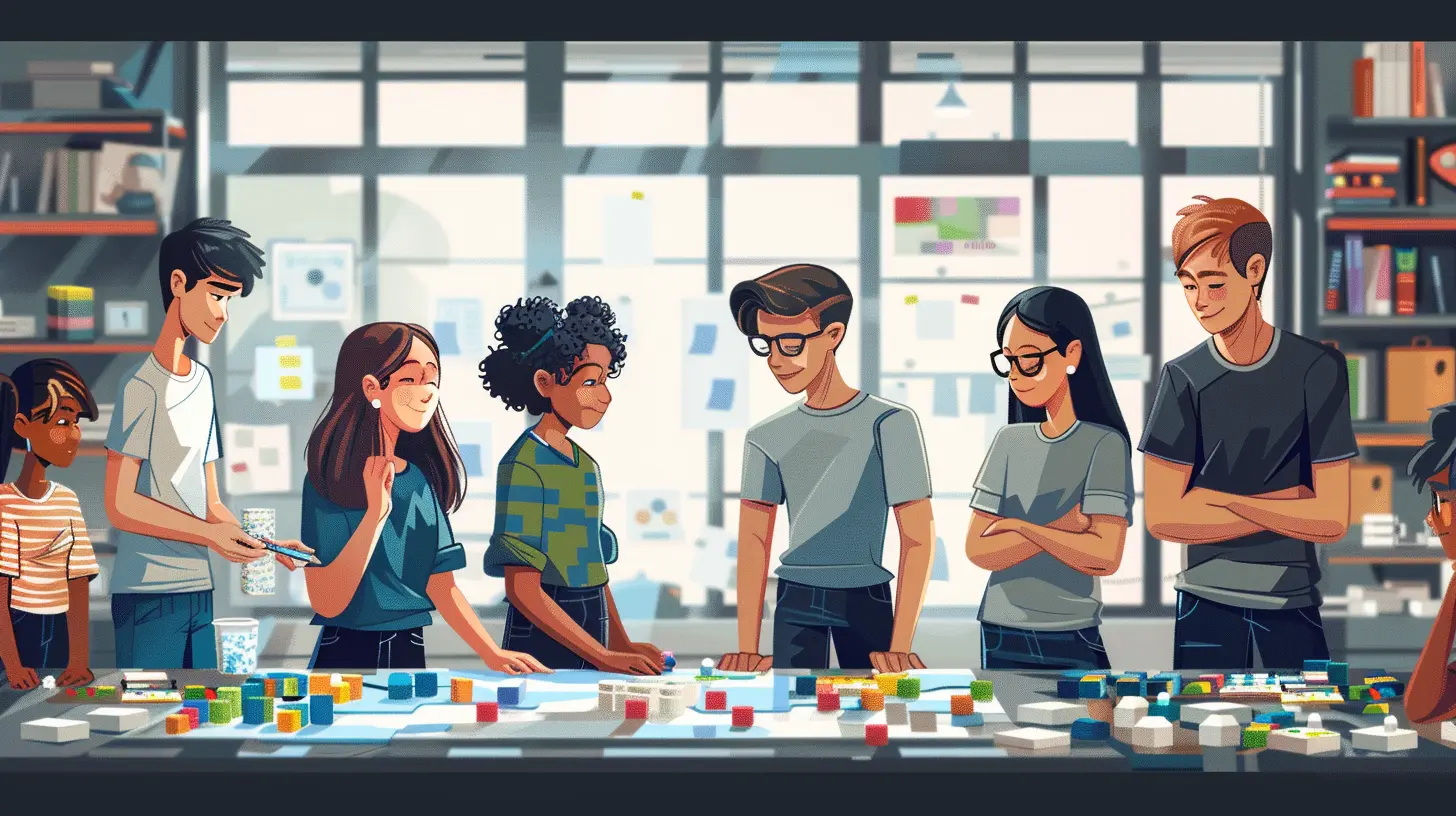
Real-Life Examples of PBL in Action
Let’s take a look at some real-life examples of how PBL has been used to solve real-world problems in educational settings.1. Designing Sustainable Cities
In some schools, students have taken on the challenge of designing sustainable cities. They investigate the environmental, social, and economic factors that contribute to a city’s sustainability and then propose solutions such as green architecture, renewable energy sources, and efficient public transportation systems.2. Addressing Food Insecurity
In another example, students tackled the issue of food insecurity in their local community. They researched the root causes of food deserts, interviewed local farmers and non-profit organizations, and ultimately designed a community garden project to provide fresh produce to low-income families.3. Advocating for Clean Water
A group of high school students worked on a project to address water contamination in their local river. They collaborated with environmental scientists, conducted water quality tests, and presented their findings to local government officials. Their project led to increased awareness and policy changes to protect the water source.These examples show how PBL not only equips students with problem-solving skills but also empowers them to make a tangible difference in the world.
Conclusion
Project-Based Learning isn’t just another educational buzzword—it’s a powerful approach that encourages real-world problem-solving in a meaningful and engaging way. By fostering critical thinking, creativity, collaboration, and resilience, PBL empowers students to take on the challenges they’ll face in the real world. And perhaps more importantly, it gives them the confidence to believe that they can make a difference.So, whether you’re a teacher looking to inspire your students or a parent exploring educational options, remember that PBL is more than just a learning method—it’s a gateway to creating problem solvers who are ready to tackle the world’s most pressing issues.
all images in this post were generated using AI tools
Category:
Innovation In EducationAuthor:

Olivia Chapman
Discussion
rate this article
2 comments
Beatrice Phillips
This article beautifully highlights the transformative power of project-based learning. By bridging the gap between theory and real-world applications, students become active problem solvers, gaining invaluable skills for life. It's inspiring to see how this approach fosters creativity, collaboration, and critical thinking in our future leaders. Thank you!
December 7, 2025 at 11:47 AM
Olivia Chapman
Thank you for your thoughtful comment! I'm glad you found the article inspiring and aligned with the benefits of project-based learning. Your insights on creativity and collaboration are truly appreciated!
Thornefield Bryant
This article beautifully highlights the transformative power of project-based learning. By connecting education to real-world challenges, it not only fosters critical thinking but also inspires students to become active problem solvers. Truly an invaluable approach in today’s world!
December 5, 2025 at 4:13 AM
Olivia Chapman
Thank you for your insightful comment! I’m glad you found the article highlights the importance of project-based learning in fostering critical thinking and real-world problem-solving.